Key Takeaways
- Hire a professional tree care service when you notice dead or broken branches, trunk cracks, sudden leaning, cavities, fungal growth, exposed roots, unusual leaf loss, or damaged bark.
- Professional help is especially important for large trees, branches near homes or roads, trees close to power lines, and work requiring ladders, chainsaws, ropes, or heavy equipment.
- Tree removal or major pruning may be necessary after storms, when a tree has severe structural damage, extensive disease, unstable roots, or poses a threat to people, buildings, utilities, or vehicles.
- Root problems, construction projects, land clearing, changes in soil grade, and damage to irrigation or drainage systems should be evaluated professionally before work begins.
- Regular inspections and timely pruning or treatment can identify hazards early, protect healthy trees, and reduce the risk of emergency removal or property damage.
Trees add shade, beauty, privacy, and value to a property, but they also require regular care to remain healthy and safe. As trees grow, branches can become overextended, diseases can spread, roots can create problems, and severe weather can leave damaged limbs hanging over homes, driveways, and other structures.
Knowing when to call a professional can prevent small problems from becoming expensive ones. While some basic yard maintenance can be handled by homeowners, many tree-related tasks require specialized equipment, experience, and safety knowledge.
A professional tree care service can evaluate the condition of your trees, identify potential hazards, recommend appropriate maintenance, and handle difficult work safely. Whether you need routine pruning, emergency assistance after a storm, or complete tree removal, knowing the right time to call a professional can protect both your landscape and your property.
Need help with your trees? Schedule a professional tree assessment to identify hazards, maintenance needs, and potential problems before they become costly.
Signs That Your Trees Need Professional Attention
One of the easiest ways to determine whether you need professional tree care is to look for visible changes. Trees can show warning signs long before a serious failure occurs.
Dead or broken branches are among the most common concerns. Small dead branches may not create an immediate threat, but larger branches can become dangerous, particularly when they are located above roofs, sidewalks, driveways, or areas where people regularly gather.
Cracks in major branches or the trunk should also be taken seriously. A crack may indicate structural weakness, especially if it extends deep into the wood.
Leaning is another potential warning sign. Some trees naturally grow at an angle, so a lean does not automatically mean a tree is dangerous. However, a sudden change in the angle of a tree may indicate root problems, soil movement, or structural instability.
Want to make an informed decision about a potentially hazardous tree? Explore professional tree removal information to better understand your options.
When Should You Hire a Tree Care Professional?
There are several situations when hiring a professional makes sense. The most obvious is when a tree becomes difficult or dangerous to manage yourself.
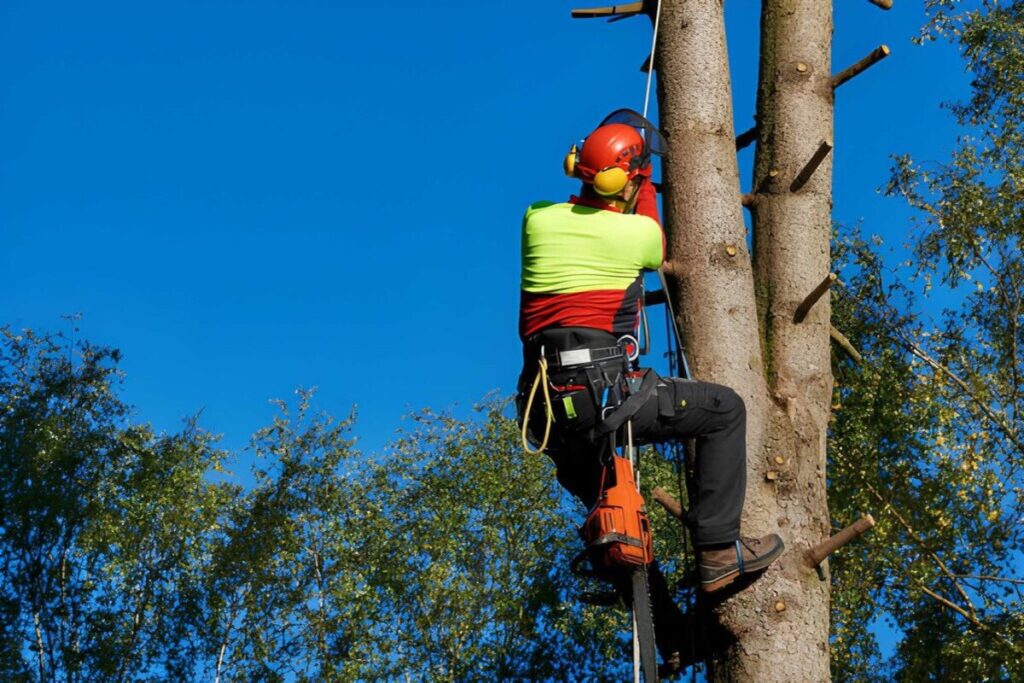
Tree work often involves ladders, chainsaws, ropes, heavy branches, and specialized equipment. Working at height creates additional risks, especially when trees are located close to power lines, buildings, fences, or roads.
Professional tree specialists have the equipment and experience needed to assess these conditions and determine the safest way to complete the job.
You should also consider professional help when a tree is unusually large. Removing or pruning a mature tree is very different from trimming a small ornamental tree. Large branches can weigh hundreds of pounds and may cause serious damage if they fall unexpectedly.
Professional assistance can reduce unnecessary risks and help protect surrounding property.
Tree Removal
Sometimes a tree cannot be saved or has become too hazardous to remain on the property.
Dead trees, severely damaged trees, trees with major structural problems, or trees affected by extensive disease may require removal.
Tree removal can be extremely dangerous when handled without the right equipment and experience. The direction in which a tree falls is not always predictable, and nearby structures can significantly complicate the process.
A professional can assess the tree, surrounding environment, and available space before determining the appropriate removal method.
In some cases, a tree may need to be removed in sections rather than taken down all at once.
Storm Damage and Emergency Tree Care
Severe weather can create immediate tree hazards.
High winds, thunderstorms, lightning, and heavy rain can break branches or cause entire trees to fall. A damaged tree may continue to pose a risk even after the storm has passed.
For example, a partially broken branch may remain suspended above a driveway or roof. A tree with damaged roots may appear stable but become increasingly unstable over time.
After significant weather, inspect your property from a safe distance. If you notice fallen trees, hanging branches, split trunks, or trees leaning toward structures, professional assistance may be necessary.
A storm damage cleanup professional can also help restore areas affected by fallen branches and debris.
Tree Health Problems
Trees can be affected by insects, fungal infections, diseases, environmental stress, and poor growing conditions.
Changes in leaf color, premature leaf loss, dead branches, unusual growths, holes in bark, and fungal structures can indicate underlying problems.
Identifying the exact cause is important because different problems require different solutions.
For example, simply cutting off affected branches may not solve an underlying disease or pest problem.
A professional evaluation can help determine whether the tree can recover, requires treatment, or needs removal.
Trees Growing Near Power Lines
Trees and utility lines can create a particularly dangerous combination.
Branches that contact electrical lines can create fire, electrical, and safety hazards. Attempting to trim these branches yourself can result in severe injury or worse.
Homeowners should never use ladders, saws, or other equipment near energized power lines.
If vegetation is interfering with utility infrastructure, contact the appropriate utility provider or a qualified professional who can determine the safest course of action.
Tree Roots Causing Property Problems
Tree problems are not always visible above ground.
Roots can sometimes interfere with sidewalks, driveways, drainage systems, foundations, or underground infrastructure.
Surface roots can lift pavement and create trip hazards. Roots may also compete with landscaping and other plants for water and nutrients.
However, removing roots without understanding the tree’s structure can destabilize it.
Integrating Tree Care With Landscaping
Tree health is closely connected to the rest of your landscape.
Water availability, soil conditions, drainage, mulch, irrigation, and surrounding vegetation can influence how well trees grow.
If you’re planning a major landscape project, consider your existing trees before making changes.
For example, a drip irrigation system installation can provide controlled watering to plants and landscape areas while reducing unnecessary water use. However, irrigation should be designed according to the needs of the trees and other plants on the property.
Changing soil grades or removing large amounts of soil around established trees can also affect their roots.
Good landscape planning considers trees as long-term features rather than obstacles.
When Tree Removal Is Part of a Larger Property Project
Sometimes trees need to be removed because a property is undergoing a major transformation.
Construction projects, new driveways, additions, land development, and major landscape renovations may require vegetation removal.
In these situations, tree work may be only one component of a broader property project.
A lot clearing service in marble falls can be useful when a site requires substantial vegetation and debris removal before construction or redevelopment begins.
Similarly, homeowners or contractors may need to coordinate tree removal with excavation, grading, demolition, or other work.
Planning these services together can help prevent delays and reduce unnecessary cleanup.
Tree Care After Construction or Property Work
Construction activity can affect existing trees even when trees are not directly removed.
Heavy machinery can compact soil around roots. Changes to drainage patterns can alter water availability. Excavation can damage roots that are hidden beneath the surface.
If construction is planned near mature trees, consider having them evaluated before work begins.
Protective measures can sometimes reduce damage to root zones and surrounding soil.
After construction, monitor trees for signs of stress. Changes may not appear immediately, so ongoing observation can be important.
Tree Debris and Cleanup
Tree work often produces significant amounts of branches, leaves, logs, and other debris.
After pruning or removal, property owners need to determine how the material will be handled.
For smaller amounts of debris, homeowners may be able to manage the cleanup themselves. Larger projects can produce far more material than a standard household waste service can handle.
In these situations, a junk removal service in Marble Falls may provide a convenient option for removing unwanted materials from the property.
For larger cleanup projects, disposal requirements should be considered before work begins.
When Land Clearing Is Necessary
Some properties contain dense vegetation, overgrown trees, brush, and other obstacles that make development or landscaping difficult.
Land clearing may be appropriate when preparing a site for construction, improving access, expanding usable yard space, or completing major property improvements.
Land clearing should be planned carefully because removing vegetation can change drainage, erosion patterns, soil exposure, and wildlife habitat.
A professional assessment can help determine which trees should remain and which vegetation should be removed.
Tree Care and Property Safety
One of the biggest benefits of professional tree care is improved property safety. A healthy, structurally sound tree is generally less concerning than one with dead limbs, significant decay, unstable roots, or major structural defects.
Regular inspections can help identify hazards before they become emergencies. This is particularly important for trees located near:
- Homes and garages
- Driveways and sidewalks
- Play areas
- Fences and outdoor structures
- Utility infrastructure
- Roads and frequently used areas
The goal is not to remove every potentially problematic tree. Instead, professional care focuses on identifying risks and determining the most appropriate solution.
Managing Large Volumes of Tree Debris
Large property projects can generate substantial amounts of organic debris. When standard hauling is not enough, a roll-off rental marble falls option may be useful for collecting branches, construction debris, and other approved materials.
The appropriate disposal method depends on the material, project size, and local requirements.
Discussing cleanup and disposal before work begins can prevent unexpected delays once the project is underway.
Want to learn more about dumpster rentals, junk removal, demolition, landscaping, and property cleanup? Browse our blog for helpful tips, expert insights, and practical advice. Explore Our Blog
Conclusion
Routine pruning, tree health concerns, storm damage, dangerous branches, large tree removal, root problems, and construction-related vegetation management are all situations where professional expertise can be valuable.
The key is not to wait until a tree becomes an emergency. Regular inspections and timely maintenance can help identify problems early, protect surrounding property, and preserve healthy trees for years to come.
Frequently Asked Questions
1. When should I hire a professional tree care service?
You should contact a tree care professional when you notice dead branches, trunk cracks, sudden leaning, cavities, fungal growth, exposed roots, damaged bark, unusual leaf loss, or branches rubbing together. Professional help is also recommended for large trees, difficult pruning, storm damage, trees near structures, and any work involving ladders, chainsaws, ropes, or heavy equipment.
2. How can I tell if a tree is dangerous?
Warning signs may include a sudden lean, large dead limbs, deep trunk or branch cracks, split trunks, root decay, raised soil near the base, cavities, significant canopy loss, or fungal growth. A single symptom does not always mean removal is necessary, but these conditions should be assessed professionally, especially when the tree is near a home, road, driveway, or play area.
3. Should I call a tree service after a storm?
Yes. Severe winds, lightning, heavy rain, and fallen branches can create hidden structural problems. Call a professional if you see a hanging branch, split trunk, uprooted tree, fresh lean, damaged roots, or a tree resting against a structure or utility line. Keep people and vehicles away from the area and do not attempt to remove storm-damaged limbs yourself.
4. When does a tree need to be removed?
Removal may be necessary when a tree is dead, severely decayed, structurally unstable, extensively diseased, dangerously leaning, or damaged beyond recovery. A tree may also need removal when it threatens people, buildings, vehicles, roads, utilities, or planned construction. However, removal should follow a professional assessment because pruning, treatment, cabling, or monitoring may be suitable alternatives.
5. Can I prune a large tree myself?
Pruning a large tree can be dangerous because branches may be heavy, unstable, or difficult to control as they fall. The risk increases when the tree is near a building, road, fence, or power line. If both feet cannot remain safely on the ground, or if chainsaws, ladders, ropes, or climbing equipment are needed, hiring a professional is the safer option.
6. What should I do if a tree is growing near power lines?
Do not trim, climb, or remove a tree that is touching or close to power lines. Branches can move unexpectedly in wind, and tools or ladders can conduct electricity. Contact the utility provider or a qualified tree professional to determine the safest procedure. Treat every nearby line as energized unless the utility confirms otherwise.
7. Can tree roots damage my property?
Tree roots can lift sidewalks, affect driveways, interfere with drainage, and conflict with underground infrastructure. However, cutting roots without understanding the tree’s structure can weaken or destabilize it. A professional should evaluate the roots, the tree’s condition, and the affected property before recommending pruning, root management, repairs, or removal.
8. What tree health problems require professional attention?
Professional evaluation is recommended when a tree develops premature leaf loss, discoloured leaves, dead branches, peeling or damaged bark, holes, unusual growths, fungal structures, or signs of insect activity. These symptoms can have different causes, including disease, pests, drought, root damage, or environmental stress. Correct identification is important because simply cutting branches may not solve the underlying problem.
9. Should I have trees inspected before construction or landscaping?
Yes. Construction, excavation, grading, driveway installation, and landscaping can damage roots, compact soil, alter drainage, or change the growing conditions around mature trees. A professional assessment before work begins can identify trees worth protecting and help establish appropriate protection zones. Planning tree care alongside the project may reduce damage, delays, and expensive corrective work.
10. Can a tree care service help with land clearing?
Some tree care companies also support land-clearing projects involving trees, brush, vegetation, and debris. Land clearing may be needed for construction, new driveways, additions, or major landscape improvements. Before clearing begins, the site should be assessed for trees to preserve, drainage concerns, erosion risks, underground utilities, and any applicable local requirements.
11. What happens to branches and debris after tree removal?
Tree work can produce branches, logs, leaves, stumps, and other organic debris. Depending on the service, materials may be chipped, cut into firewood, hauled away, recycled, or placed in an appropriate disposal container. Discuss cleanup and disposal before work begins, particularly for large removals or property projects that generate more material than regular household waste services can handle.