Residential demolition is a major undertaking that requires careful planning, proper permits, safety measures, and a clear understanding of the process before work begins. Whether you are removing an aging home, clearing a damaged structure, or preparing land for a new build, knowing what to expect can help you avoid delays, unexpected expenses, and safety risks.
Homeowners often assume demolition is simply tearing down walls and hauling debris away. In reality, a professional demolition service involves inspections, utility disconnections, environmental considerations, debris management, and site preparation. Understanding these steps ahead of time can make your project smoother and more cost-effective.
👉 Planning a residential teardown? Speak with a professional team today to schedule an on-site evaluation and receive a customized demolition plan tailored to your property goals.
Understanding Residential Demolition
Residential demolition refers to the process of safely dismantling or removing a home or residential structure. Depending on the condition of the building and the homeowner’s objectives, demolition may involve complete removal or selective demolition, where only specific areas are taken down.
Complete demolition is often chosen when a home has severe structural damage, extensive fire damage, mold contamination, or when the land is being redeveloped. Selective demolition is common during renovations when homeowners want to preserve certain structural elements while replacing others.
A reputable demolition company will explain the process clearly and provide a written estimate outlining labor, equipment, disposal fees, permit costs, and projected completion timelines.
Before any physical work begins, professionals evaluate the property to determine the safest and most efficient method for removal. This assessment influences the project timeline, equipment requirements, and disposal strategy.
Why Homeowners Choose Demolition Instead of Renovation
In some cases, renovation costs can exceed the value of rebuilding. Older homes may have outdated electrical systems, weak foundations, asbestos-containing materials, or water damage hidden behind walls. Demolition allows homeowners to start fresh with modern designs, improved energy efficiency, and updated building standards.
Other common reasons homeowners choose demolition include:
- Expanding living space with a custom-built home
- Removing unsafe or condemned structures
- Eliminating storm-damaged properties
- Improving property value
- Preparing land for future development
For many homeowners, rebuilding provides more long-term benefits than attempting extensive repairs on an aging structure.
Initial Site Inspection and Planning
The first step in any residential demolition project is a detailed site inspection. Demolition Contractors examine the structure, the surrounding environment, accessibility, and safety concerns. This stage helps identify challenges that may affect the timeline or budget.
During the inspection, professionals often evaluate:
- Structural stability
- Hazardous materials
- Utility locations
- Nearby structures or trees
- Access points for heavy machinery
- Soil conditions and drainage
Planning is essential because every property presents unique conditions. Homes in crowded neighborhoods require additional precautions compared to isolated properties with open access.
Permits and Legal Requirements
Most municipalities require permits before demolition can begin. Permit requirements vary depending on the location and size of the structure, but they generally ensure the work meets local safety and environmental regulations.
Common permit-related requirements include:
- Utility disconnection approvals
- Environmental inspections
- Site safety documentation
- Waste disposal plans
- Noise regulation compliance
Skipping permits can result in fines, legal complications, or project shutdowns. Professional contractors usually handle the permit application process on behalf of homeowners, reducing stress and preventing costly mistakes.
👉 Need help preparing your property before demolition starts? Contact a trusted local expert for a complete site assessment and efficient debris management solutions.
Utility Disconnections Before Demolition
One of the most important steps before demolition is disconnecting utilities. Electricity, gas, water, and sewer connections must be safely shut off to prevent accidents.
Utility providers typically require advance notice before disconnections occur. This process may take several days or even weeks, depending on local regulations and scheduling availability.
Gas line disconnections are especially critical because active gas lines create serious explosion risks. Contractors coordinate with utility companies to confirm all services are properly terminated before demolition equipment arrives on site.
Hazardous Material Inspections
Older homes may contain hazardous materials that require specialized removal procedures. Asbestos and lead paint are among the most common concerns in residential structures built decades ago.
Professional inspections help identify dangerous substances before demolition begins. If hazardous materials are discovered, licensed abatement specialists remove them according to environmental safety regulations.
Failing to address hazardous materials properly can create health risks for workers, nearby residents, and the environment. Proper containment and disposal procedures are essential for maintaining safety throughout the project.
Equipment Used During Residential Demolition
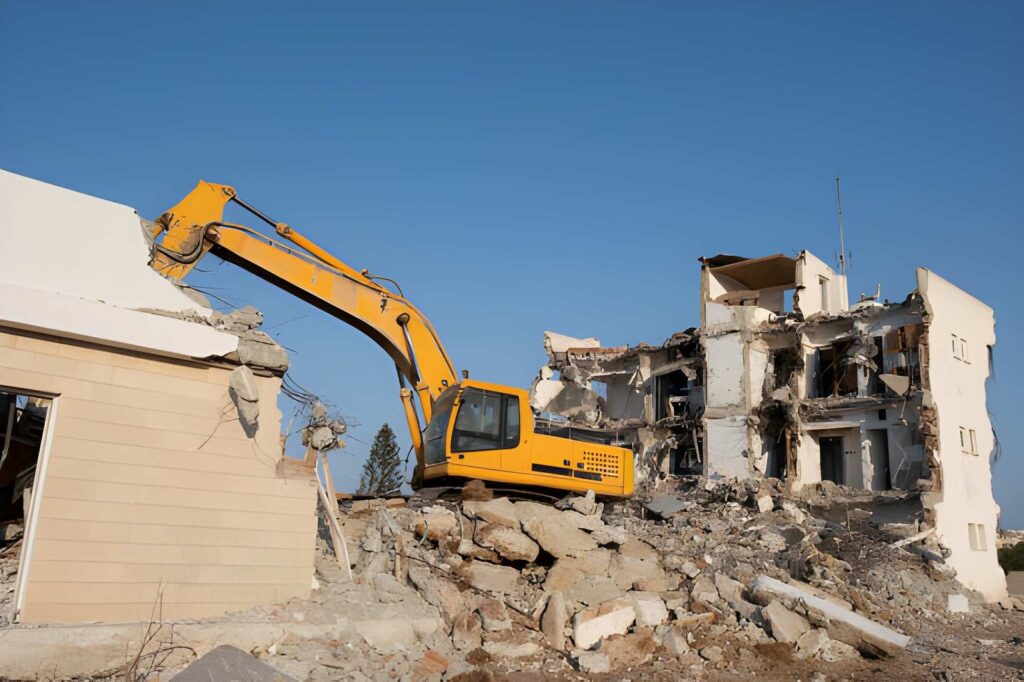
Modern demolition projects rely on specialized equipment to improve efficiency and safety. The machinery used depends on the project scope and site conditions.
Common equipment may include:
- Excavators
- Bulldozers
- Hydraulic breakers
- Loaders
- Dump trucks
- Concrete crushers
In some projects, contractors may also use a skid steer for clearing land after the structure is removed. This equipment helps grade surfaces, move debris, and prepare the property for future construction.
Choosing the Right Demolition Method
Not every demolition project uses the same approach. Contractors select methods based on the structure’s size, location, materials, and surrounding conditions.
Mechanical Demolition
Mechanical demolition uses heavy machinery such as excavators and bulldozers to tear down structures efficiently. This method is commonly used for complete residential teardowns because it is fast and cost-effective.
Selective Demolition
Selective demolition focuses on removing specific areas while preserving the rest of the structure. This method is often used during remodeling projects and requires greater precision.
Deconstruction
Deconstruction involves carefully dismantling a structure to salvage reusable materials like wood, fixtures, doors, and metal. Although more time-consuming, it reduces landfill waste and supports sustainable building practices.
Debris Removal and Waste Management
Demolition creates a significant amount of debris, including wood, drywall, concrete, roofing materials, and metal. Proper disposal is an important part of the process.
Many projects also require roll-off dumpster rentals to manage debris efficiently throughout the demolition process. Having designated disposal containers on site helps keep the area organized and improves worker safety.
Contractors separate recyclable materials whenever possible to reduce environmental impact. Concrete, asphalt, and metal are commonly recycled rather than sent to landfills.
In addition to structural debris, homeowners sometimes need a junk removal service to clear garages, sheds, furniture, or unwanted personal items before demolition begins.
Site Preparation After Demolition
Once the structure is removed and debris cleared away, the site still requires additional preparation before new construction can begin.
Post-demolition site preparation may include:
- Grading uneven surfaces
- Removing tree stumps
- Filling holes or trenches
- Compacting soil
- Addressing drainage issues
Some homeowners also coordinate a lot clearing service to remove excess vegetation, rocks, or leftover materials from the property. Thorough site preparation helps create a stable foundation for future construction projects.
If extensive vegetation removal is required, a specialized lot clearing company may be brought in to handle overgrown land safely and efficiently.
Environmental Considerations
Environmental responsibility plays an increasingly important role in modern demolition projects. Contractors today aim to minimize landfill waste and reduce environmental disruption whenever possible.
Eco-conscious demolition practices may include:
- Recycling concrete and metal
- Salvaging reusable building materials
- Dust suppression measures
- Fuel-efficient equipment usage
- Proper hazardous waste disposal
Dust control is especially important in residential neighborhoods. Contractors often use water sprays and protective barriers to minimize airborne debris during demolition.
Noise management is another key consideration. Local regulations may restrict demolition hours to reduce disturbances for neighboring properties.
Safety Measures During Residential Demolition
Safety is one of the most critical aspects of any demolition project. Residential structures can contain hidden hazards such as unstable flooring, weakened roofs, electrical risks, and sharp debris.
Professional crews follow strict safety procedures to protect workers, homeowners, and nearby residents.
Important safety measures include:
- Securing the demolition perimeter
- Wearing protective gear
- Conducting structural assessments
- Using dust suppression systems
- Following equipment operation guidelines
- Monitoring debris removal procedures
Attempting DIY demolition can lead to severe injuries, structural collapses, or costly property damage. Hiring trained professionals significantly reduces these risks.
How Long Does Residential Demolition Take?
Project timelines vary depending on the structure size, permit approvals, weather conditions, and debris removal requirements.
A small residential demolition may take only a few days, while larger or more complex projects can extend several weeks. Typical project stages include:
- Site inspection and planning
- Permit approvals
- Utility disconnections
- Hazardous material removal
- Structural demolition
- Debris hauling
- Final grading and cleanup
Delays can occur if unexpected structural problems or hazardous materials are discovered during the project.
Preparing Your Property Before Demolition Day
Homeowners can take several steps to help demolition proceed smoothly.
Protect Nearby Landscaping
If you plan to preserve trees, gardens, or outdoor features, discuss protection measures with your contractor beforehand. Some homeowners schedule a professional landscaping service after demolition to restore or redesign the property once construction is complete.
Remove Personal Belongings
All personal items should be removed from the structure before demolition begins. This includes furniture, appliances, electronics, and sentimental belongings.
Notify Neighbors
Demolition projects create noise, dust, and increased truck traffic. Informing neighbors in advance helps maintain positive relationships and reduces misunderstandings.
Secure Important Documents
Property records, permits, insurance documents, and utility confirmations should be organized before work starts.
What Happens After the Site Is Cleared?
After demolition and cleanup are complete, homeowners can begin planning the next phase of development. In some redevelopment projects, homeowners also install upgraded outdoor systems, such as irrigation sprinkler installation, to support future landscaping plans.
Depending on the project goals, the cleared property may be prepared for:
- New home construction
- Garage additions
- Outdoor living areas
- Commercial redevelopment
- Driveway installation
- Utility upgrades
Proper grading and soil preparation at this stage can help prevent future drainage problems and foundation issues.
👉 Ready to move forward with your residential demolition project? Visit our Contact page today to speak with our team and schedule your personalized consultation.
Final Thoughts
Residential demolition is far more complex than simply tearing down a structure. From permits and inspections to debris removal and land preparation, every stage requires careful coordination and professional expertise.
Understanding what to expect before your project begins can help you plan effectively, stay within budget, and avoid unnecessary delays. Whether you are rebuilding after storm damage or preparing for a completely new home, working with experienced professionals ensures the process is completed safely and efficiently.
FAQs
1. What is residential demolition?
Residential demolition is the safe dismantling or removal of homes, using methods like complete teardown, selective removal, or deconstruction. It starts with site inspections for hazards and utilities, chosen based on damage (e.g., fire, mold) or renovation goals to prepare land efficiently.
2. Why choose demolition over renovation for a home?
Demolition is ideal when renovation costs exceed rebuilding value, especially for old homes with asbestos, weak foundations, or severe damage. It enables modern, energy-efficient builds, removes unsafe structures, boosts property value, and suits expansions or storm recovery.
3. What permits are required for residential demolition?
Permits typically include utility disconnections, environmental inspections, waste plans, and noise compliance—handled by pros to avoid fines. Requirements vary by location and structure size; skipping them risks shutdowns and legal issues.
4. How do you disconnect utilities before demolition?
Shut off electricity, gas, water, and sewer 1-2 weeks ahead via providers, confirming terminations to prevent explosions or accidents. Gas lines are highest risk; contractors coordinate for safety before equipment arrives.
5. How long does residential demolition take?
Small projects take 2-5 days; larger ones 1-4 weeks, covering permits, teardown, debris removal, and grading. Delays from weather, hazards, or inspections extend timelines—plan for unique site factors.
6. What are common demolition methods for homes?
Mechanical (excavators for fast teardowns), selective (precise renovations), or deconstruction (salvaging materials to cut waste). Method depends on size, location, and goals; pros select for safety and efficiency.
7. How to handle debris in residential demolition?
Use roll-off dumpsters for organized removal; recycle concrete, metal, and wood to minimize landfill waste. Pre-clear junk with services; post-demo grading prepares for new builds.
8. What safety measures are used in home demolition?
Perimeter fencing, PPE, dust suppression, structural checks, and pro equipment operation protect workers and neighbors. Avoid DIY to prevent collapses or injuries from hidden hazards like unstable roofs.